Some might say Kung Hei Fat Choi (恭喜發財) in Cantonese, or Gong Xi Fa Cai (恭喜发财) in Mandarin. While the rest of the world says goodbye to the old year on January 1st, many Asian cultures wait until late January or February to truly turn the page. I’m not exactly sure who decides the lunar calendar dates—they change every year—but what I do know is this: this is our biggest celebration of the year.
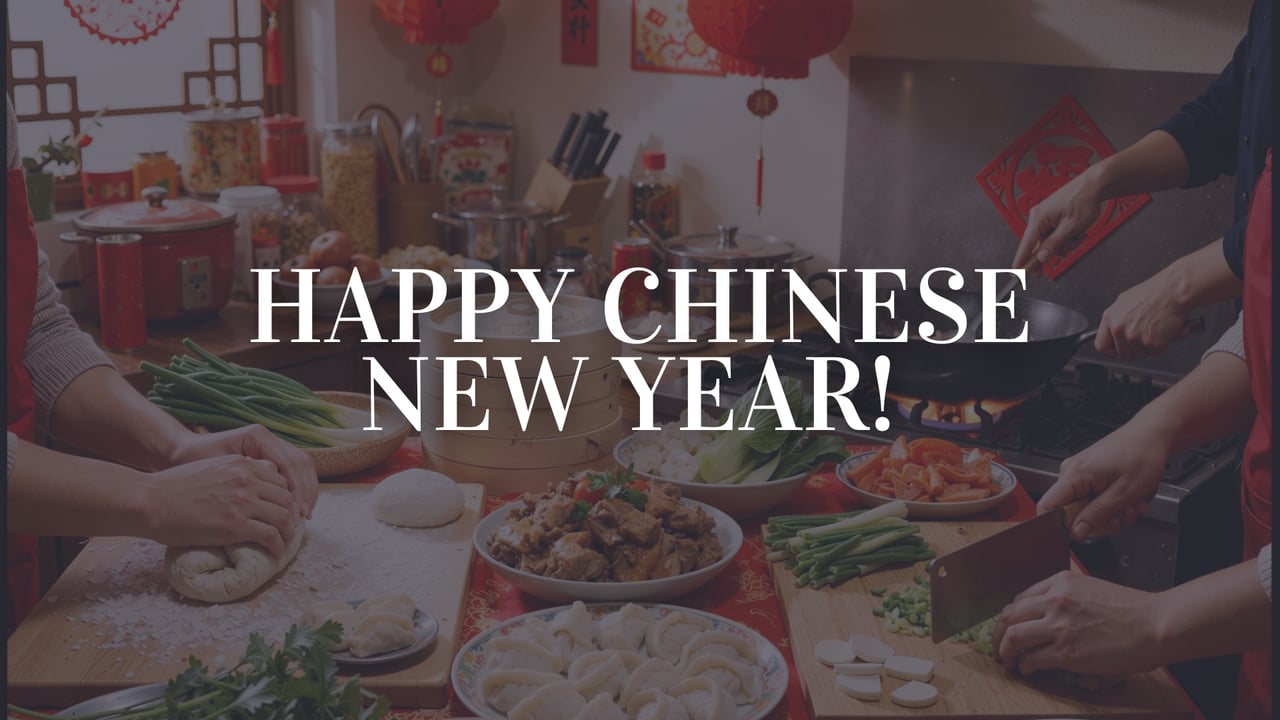
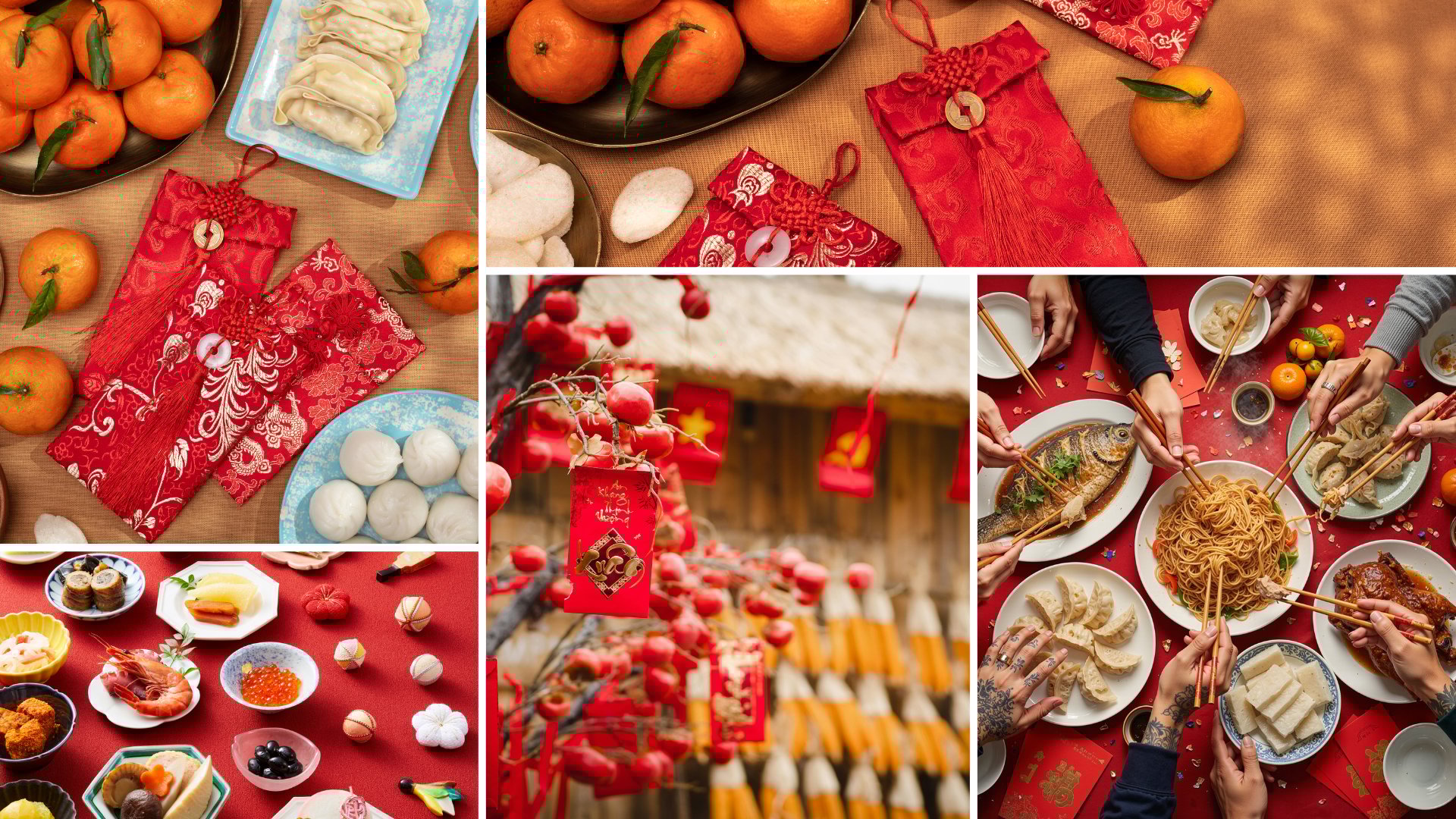
It’s a time when drinks are flowing, Uncle Jimmy is cheffing it up on the wok, kids are lined up waiting for their red envelopes (红包), and—most importantly—there is an abundance of food.
Food plays a huge role in every culture, but during Chinese New Year, each dish carries deep meaning. These aren’t just meals—we’re literally eating our wishes for the year ahead.
Noodles symbolize long life and good health. The longer the noodles, the better. Traditionally, they’re hand-pulled, and you’re not supposed to cut them—because the longer the noodle, the longer and healthier your life is believed to be.
Dumplings (Jiao Zi 饺子) are shaped like ancient gold ingots or money bags, depending on how you fold them. Because of this, dumplings represent wealth and prosperity. The more you eat, the better your chances—at least that’s what we like to believe.
Fish (Yu 鱼) is another must-have. In my family, we usually pan-fry a whole fish for New Year’s dinner. The word “fish” sounds like “surplus” or “abundance” in Chinese, symbolizing that you’ll have more than enough in the year to come.
Nian Gao (年糕), or sticky brown sugar rice cake, is a homophone for “higher year.” It represents growth, progress, and rising success—whether that’s in life, career, or income.
Chicken is considered lucky because “ji” (鸡) sounds like “ji” (吉), meaning good fortune and prosperity. It’s traditionally served whole—head and feet included—to symbolize unity, wholeness, and a good beginning and end to the year. Chicken is often braised or roasted simply with ginger or soy, and it’s traditionally offered to ancestors and gods before the family eats. Fun fact: chicken feet are often eaten by the breadwinner, since “grabbing” wealth sounds similar to a chicken’s talons.
Sweet rice balls (Tang Yuan 汤圆) are most commonly eaten during the Lantern Festival, but in southern China, they’re enjoyed throughout the New Year celebrations. Their round shape and name symbolize reunion, togetherness, and family harmony—exactly what this season is all about.
There are so many other dishes enjoyed during Chinese New Year, but these are a few of my favorites and the ones closest to my heart. Maybe you, the reader, might try one (or all) of them this year. You never know—it just might bring you love, wealth, and prosperity.
Happy Chinese New Year! 🧨🧧