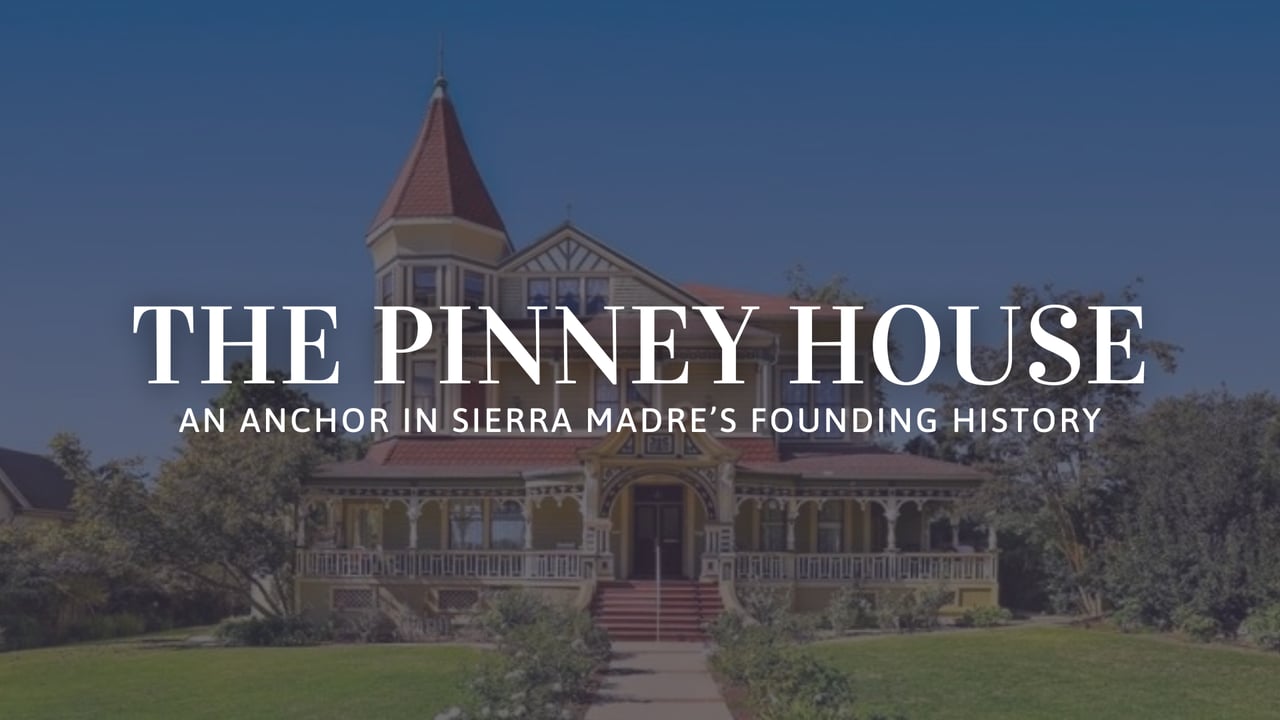
The Pinney House is more than an architectural gem — it stands as a cornerstone of Sierra Madre’s early history and development. From its construction in the late 19th century to its role as the community’s informal civic hub, the property reflects the vision and vitality that shaped the town’s beginnings.
Dr. Elbert Pinney’s Vision and Influence
The story begins with Dr. Elbert Pinney — a retired Civil War surgeon, farmer, and developer — who arrived in the newly established Sierra Madre Tract in August 1887. At 70 years old, he purchased 35 acres of land at the base of the San Gabriel Mountains, embodying the entrepreneurial spirit that defined Southern California’s land boom.
Rather than simply building a home, Dr. Pinney commissioned the grand Queen Anne structure known as the Hotel Sierra Madre (also called the Sierra Vista Hotel). His decision was both practical and visionary, positioning him at the center of the region’s growth and attracting newcomers to the fledgling community.
- Attracting Settlers: The 24-room hotel catered to affluent East Coast travelers arriving via the new Santa Fe Railroad, many of whom were in the area to purchase land. Its stately design projected prosperity and offered a welcoming base for those exploring the new settlement.
- Agricultural Innovation: Beyond real estate, Dr. Pinney was a leader in local citriculture. He gave “scientific attention to the raising of oranges,” achieving notable success as an orange grower and helping to establish the San Gabriel Valley’s reputation for high-quality citrus.
Through these ventures, Dr. Pinney became one of Sierra Madre’s most influential early residents, leaving a lasting imprint on both its economy and its identity.
The Pinney House as Sierra Madre’s First Town Hall
Long before Sierra Madre’s incorporation in 1907, the Pinney House — then operating as the Hotel Sierra Madre — served as the community’s de facto town hall. Its spacious parlor and gathering rooms hosted meetings of the Board of Trade, the town’s first civic organization.
This group of pioneering residents took on the duties of governance, promotion, and community planning during Sierra Madre’s formative years. Within the walls of the Pinney House, they debated and decided the issues that would guide the town’s future — making the property not only a social landmark, but also a political one.
An Enduring Legacy
Over the decades, the Pinney House evolved — serving at different times as a sanatorium, boarding house, and even a film set — yet its historical significance remains rooted in its original purpose. Built in 1887, at a time when few other civic or commercial structures existed, it helped anchor the young community both physically and socially.
Today, as a designated City Landmark, the Pinney House continues to embody Sierra Madre’s heritage. Its potential revival as a bed and breakfast would represent not just a return to its origins in hospitality, but also a renewal of its enduring role as a gathering place — a living monument to the vision that founded Sierra Madre.